about-us
CA CS Sparsh Dodani

Educator | Mentor | Finance & Law Enthusiast

“I’m a Chartered Accountant and Company Secretary who cleared all levels of both in a single attempt – currently also pursuing CFA. But beyond qualifications, my real passion lies in teaching, mentoring, and helping students succeed with clarity and confidence.

Over the years, I’ve developed a deep interest in the intersection of law, finance, and strategic thinking – areas that are now a core part of the modern CA curriculum. I specialize in subjects that go beyond rote learning and require real understanding and application – be it Integrated Business Solutions, corporate law, or Advanced Financial Management.

What drives me is simplifying these complex subjects, breaking them down into practical insights, and guiding students to not just pass, but excel with a professional mindset."


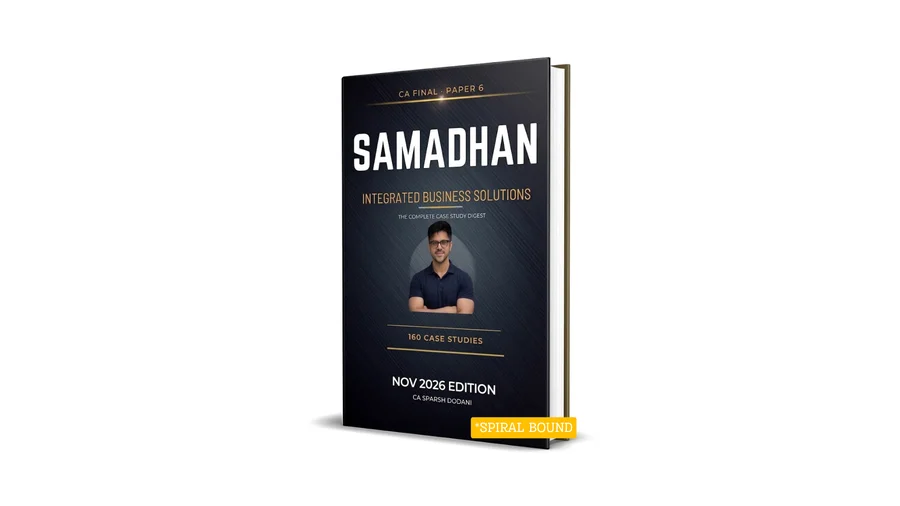
SAMADHAN 2.0 Case Study Book Cover

Case Study Book

SAMADHAN 2.0

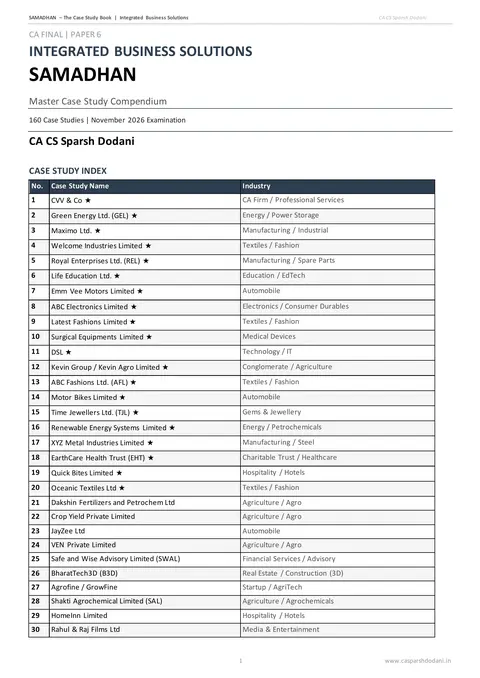
  • SAMADHAN 2.0 CA Final Paper 6 : Integrated Business Solutions | May 2026

  • 128 case studies compiled from ICAI sources including past papers, RTPs, MTPs, MTPs, and the ICAI Case Study Digest.

  • Curated compilation to ensure broad coverage across ICAI-relevant case study types without overlap.

  • Case studies presented with a focus on answer structuring aligned to ICAI exam expectations.

  • Structured navigation with case index, subject-wise mapping, and topic-wise classification for quick reference.

  • Clean, uniform formatting to support efficient reading and practice.
about-us


Book Features

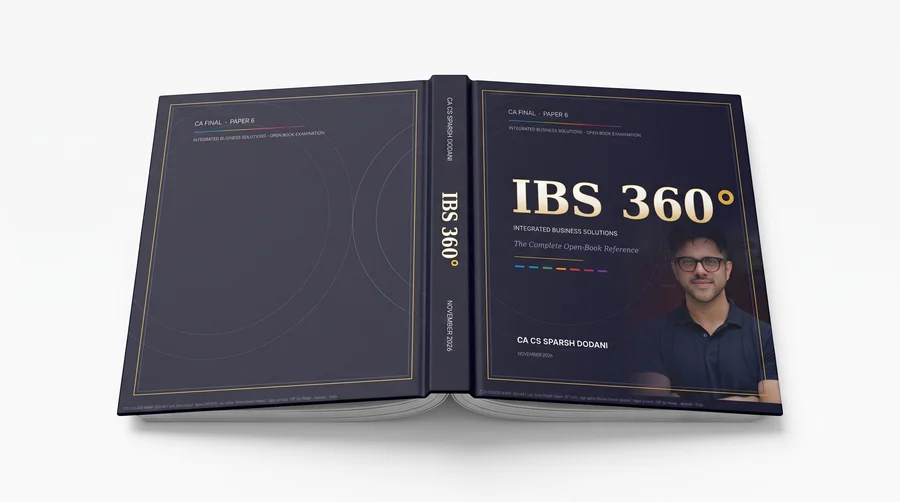
IBS 360 2.0

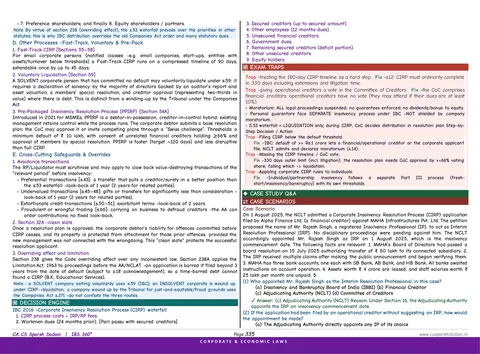
  • Engineered for the Open-Book Format: This is not a standard textbook; it is structured specifically for rapid retrieval. The layout prioritizes finding answers within the 4-hour time constraint over passive reading.

  • 'Sampurna' Integrated: I have merged the concise summary charts and core concepts of Sampurna directly into this book. You no longer need a separate revision volume—your concepts and application material are now in one place.

  • 7-Subject Consolidation: Instead of carrying seven heavy subject books to the exam hall, this single volume covers FR, AFM, Audit, Law, SCMPE, Direct Tax, and IDT, reducing physical clutter and mental stress.

  • Strategic Emphasis: The content is organized to highlight "Integrated Linkages" (how subjects connect) and "Exam Traps" (where students lose marks), ensuring you focus on high-scoring areas.

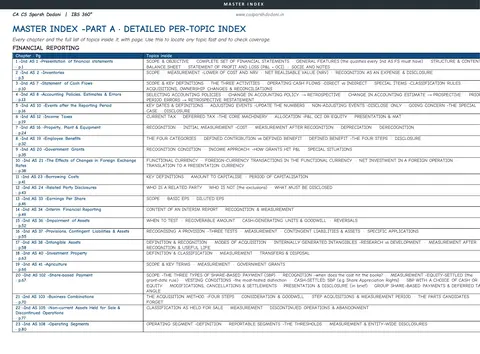
  • Zero-Lag Navigation: Designed to work seamlessly with the Master Reference Manual. Every topic is indexed to help you locate niche provisions in under 30 seconds.

IBS 360 2.0

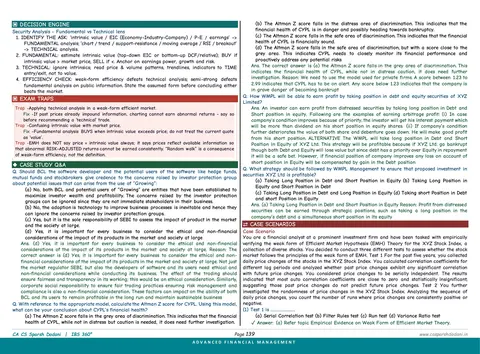
Sample Pages

Explore sample content from IBS 360 2.0 covering key topics and concepts

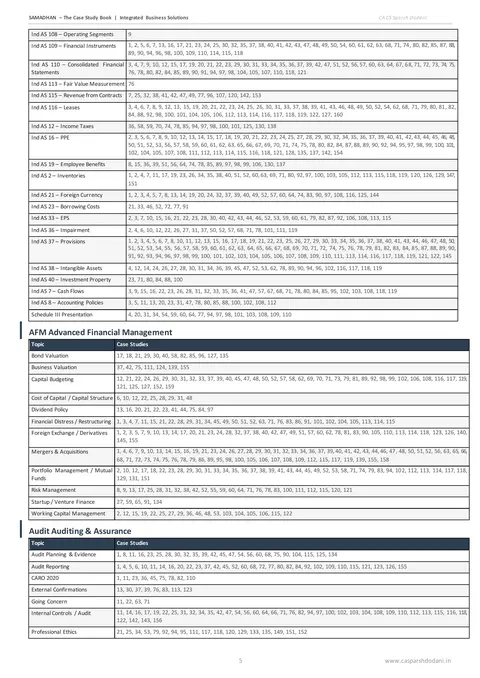
IBS 360 2.0


MODULE 1: FINANCIAL REPORTING

CHAPTER 1: Ind AS 16 - Property, Plant & Equipment
1. THE CORE CONCEPTS (DEEP DIVE)
1.1 Definition and Scope
Definition of Property, Plant and Equipment (PPE):

Property, Plant and Equipment (PPE) are tangible items that:

  • (a) Are held for use in the production or supply of goods or services, for rental to others, or for administrative purposes; and
  • (b) Are expected to be used during more than one reporting period.

The definition encompasses three critical elements that must ALL be satisfied for an item to qualify as PPE under Ind AS 16:

Element Explanation Exam Relevance
Tangible Nature Physical substance that can be seen, touched, and measured Distinguishes from Intangible Assets (Ind AS 38)
Purpose of Holding Production/supply of goods/services, rental, or administrative use Excludes assets held for sale (Ind AS 105) or investment (Ind AS 40)
Time Horizon Expected use beyond one reporting period Creates the "long-term" distinction from inventories and current assets
SCOPE INCLUSIONS TABLE
Items Covered Items Exclusively Covered Items Excluded
Land and Buildings PPE classified as held for sale per Ind AS 105 Biological assets related to agricultural activity (Ind AS 41)
Plant and Machinery Replacement parts for major inspections/overhauls Exploration and evaluation assets (Ind AS 106)
Furniture and Fixtures Spare parts, stand-by equipment Mineral rights, mineral reserves (Ind AS 106)
Vehicles and Equipment Servicing equipment Investment property (Ind AS 40)
Recognition Criteria (Dual Test):

An item of PPE shall be recognized as an asset if and only if:

  • (a) Probable Future Economic Benefits Test: Future economic benefits associated with the asset are expected to flow to the entity
  • (b) Cost Reliability Test: The cost of the asset can be measured reliably

CA Sparsh Dodani

IBS 360 2.0

Revaluation Factor and Carrying Amount Calculations:
  • Revaluation Factor = Fair Value / Carrying Amount Before Revaluation
  • Adjusted Gross Amount = Original Cost × Revaluation Factor
  • Adjusted Accumulated Depreciation = Original Accumulated Depreciation × Revaluation Factor
  • Net Carrying Amount After Revaluation = Adjusted Gross Amount - Adjusted Accumulated Depreciation = Fair Value
1.6 Derecognition
DERECOGNITION CRITERIA TABLE
Event Accounting Treatment
Disposal Derecognize on disposal date
No future economic benefits expected Derecognize immediately
Replacement of component Derecognize replaced part's carrying amount

Gain/Loss on Disposal = Net Disposal Proceeds (Net of disposal costs) - Carrying Amount of Asset = Gain/(Loss) Recognized in P&L

2. INTEGRATED LINKAGES (THE IBS CORE)
LINKAGE 1: Ind AS 16 ↔ Ind AS 36 (Impairment of Assets)

Connection Point: Carrying amount determination

Ind AS 16 determines the carrying amount of Property, Plant, and Equipment (PPE). Ind AS 36 requires impairment testing when indicators exist, comparing recoverable amount (higher of fair value less costs to sell and value in use) with carrying amount from Ind AS 16 to determine impairment loss.

Exam Integration: When PPE is carried at revalued amount under Ind AS 16, any impairment loss first reduces revaluation surplus in Other Comprehensive Income (OCI) before hitting Profit & Loss (P&L).

LINKAGE 2: Ind AS 16 ↔ Ind AS 23 (Borrowing Costs)

Connection Point: Initial measurement of qualifying assets

Ind AS 23 mandates capitalization of borrowing costs directly attributable to acquisition, construction, or production of qualifying assets. Ind AS 16 incorporates these capitalized borrowing costs as part of the cost of PPE. A qualifying asset under Ind AS 23 is one that takes a substantial period to get ready for intended use.

Exam Integration: If borrowing costs are capitalized under Ind AS 23, they form part of the depreciable base under Ind AS 16 and are subsequently depreciated over the asset's useful life.

LINKAGE 3: Ind AS 16 ↔ Ind AS 37 (Provisions, Contingent Liabilities and Contingent Assets)

Connection Point: Initial estimate of dismantling/restoration costs

When an entity has an obligation to dismantle or restore an asset, Ind AS 37 requires recognition of a provision. This provision is added to the cost of the asset under Ind AS 16, forming part of the depreciable amount.

CA Sparsh Dodani

IBS 360 2.0

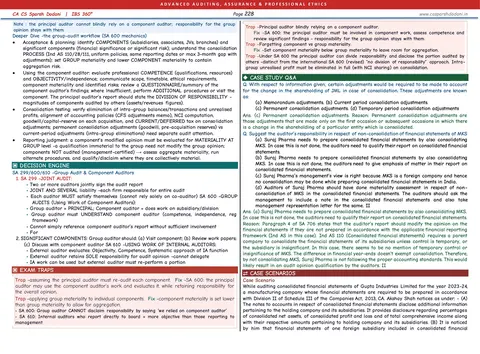
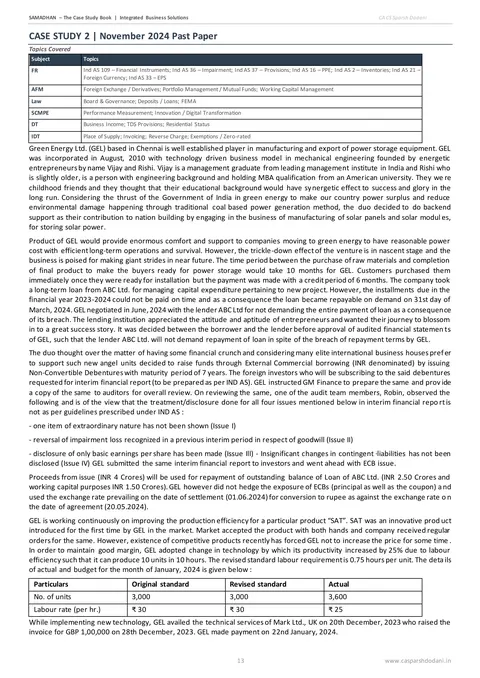
CHAPTER 2: Quality Control, SAs, and Auditing Standards
1. THE CORE CONCEPTS (DEEP DIVE)
1.1 Standards on Auditing (SAs) - Framework and Hierarchy
DEFINITION BOX

Standards on Auditing (SAs): Authoritative standards issued by the Auditing and Assurance Standards Board (AASB) of ICAI that establish requirements and provide guidance for auditors to conduct quality audits. SAs are to be complied with in the audit of historical financial information, and departure requires justification and disclosure.

SA CATEGORIES TABLE
Category SAs Included Purpose Applicability
200-299 - General Principles and Responsibilities SA 200, 210, 220, 230, 240, 250, 260, 265 Overall objectives, engagement terms, quality control, documentation, fraud, laws, communication, internal control All audits
300-499 - Risk Assessment and Response SA 300, 315, 320, 330, 402, 450, 500, 501, 505, 510, 520, 530, 540, 550, 560, 570, 580 Planning, understanding entity, materiality, responses, IT controls, evaluation, audit evidence, external confirmations, sampling, analytical procedures, accounting estimates, related parties, subsequent events, going concern, management representations All audits
600-699 - Using Work of Others SA 600, 610, 620, 630 Group audits, internal auditors, experts, component auditors As applicable
700-799 - Audit Conclusions and Reporting SA 700, 705, 706, 710, 720 Forming opinion, modified opinions, emphasis of matter, comparative information, other information All audits
800-899 - Specialized Areas SA 800, 805, 810 Special considerations - audits of specialized entities As applicable
1.2 SQC 1 - Quality Control for Firms
DEFINITION BOX

SQC 1: Standard on Quality Control that establishes standards and provides guidance regarding a firm's responsibilities for its system of quality control for audits and reviews of financial statements, and other assurance and related services engagements.

CA Sparsh Dodani

IBS 360 2.0

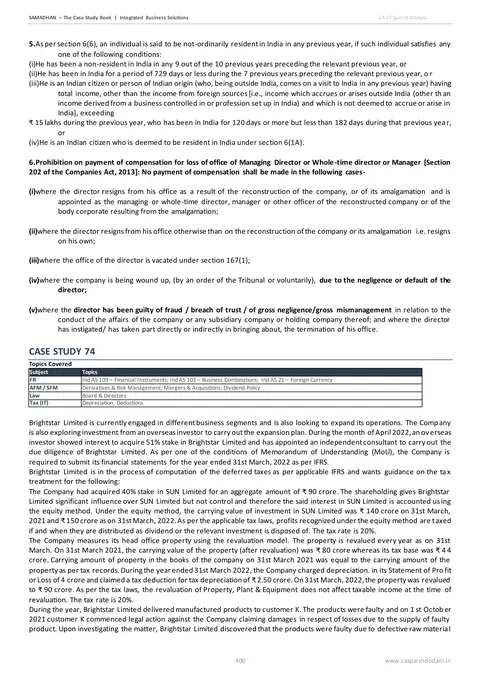
Asset Class: Hybrid, ELSS

Goal: Mix of Debt and Equity (Balanced Advantage), Tax Saving (Sec 80C), 3-year lock-in

7.2 KEY METRICS & CALCULATIONS
📊 Net Asset Value (NAV):

NAV = (Market Value of Investments + Current Assets - Current Liabilities) / Number of Units Outstanding

💰 Return on Mutual Fund for Investor:

Return = (NAVend - NAVbegin + Dividend) / NAVbegin × 100

📄 Expense Ratio:

Total Expense Ratio (TER): Annual fee charged to the fund (Mgmt fee, Audit fee, Marketing)

Impact: NAV is calculated AFTER deducting TER.

Direct Plan: Lower TER (No agent commission) → Higher Return

Regular Plan: Higher TER → Lower Return

7.3 INVESTMENT PLANS
A. Dividend Reinvestment Plan:
  • Dividend declared is NOT paid out
  • It is used to buy additional units at the ex-dividend NAV
  • Result: No cash flow to investor. Number of units increases. NAV drops by dividend amount.
B. Bonus Issue:
  • Free units issued to existing investors (e.g., 1:5 ratio)
  • Impact: Number of units ↑, NAV↓. Total Investment Value remains SAME.
7.4 INTEGRATED LINKAGES (THE IBS CORE)
🔗 IBS LINKAGE: Taxation (Finance Act Amendments)
Equity Oriented Fund (>65% Equity):
  • STCG (Sec 111A): 20% (if held < 12 months)
  • LTCG (Sec 112A): 12.5% (if held > 12 months) on gains exceeding ₹1.25 Lakh
Debt Oriented Fund (<35% Equity):
  • From 1st April 2023, gains are treated as Short Term Capital Gains regardless of holding period
  • Tax Rate: Slab Rates (No Indexation Benefit)

IBS Strategy: Debt Mutual Funds have lost their tax arbitrage over Fixed Deposits.

7.5 THE ADJUSTMENT LIBRARY (EXAM TRAPS)

▲ EXAM TRAP: TRAP #1: NAV Calculation - Accrued Income

Scenario: 'Dividend declared by a company held in portfolio but not yet received.'

CA Sparsh Dodani

IBS 360 2.0

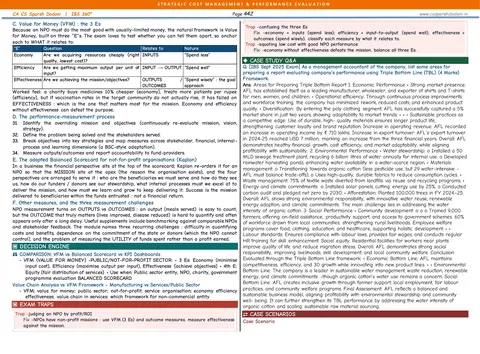
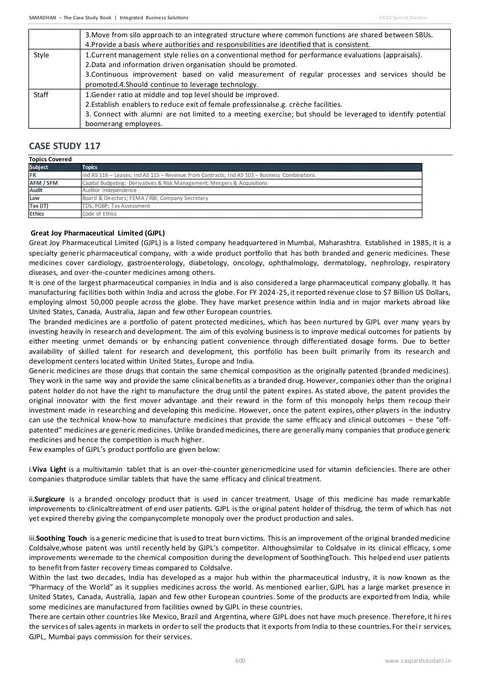
The Bank always wins. Bank Buy Rate < Bank Sell Rate.

B. Cross Rates (Chain Rule):

Cross Rate Calculation: Used when direct quote is unavailable.

Scenario: Need ₹/£ Rate. Given ₹/$ and $/£.

₹/£ = ₹/$ × $/£

C. Forward Rates (Premium/Discount):

Premium vs Discount:

  • Premium: Foreign currency is stronger in future (Forward > Spot)
  • Discount: Foreign currency is weaker in future (Forward < Spot)

Forward Rate = Spot Rate ± Premium or Discount

9.2 FOREX THEORIES
Theory Relationship Formula
Interest Rate Parity (IRP) Spot vs Forward link to Interest Rates F = S × (1+rh)/(1+rf)
Currency with higher interest trades at Discount
Purchasing Power Parity (PPP) Spot vs Expected Future Spot link to Inflation S1 = S0 × (1+πh)/(1+πf)
Higher inflation = Currency Depreciation
International Fisher Effect (IFE) Interest Rates vs Expected Future Spot (1+rh)/(1+rf) = E(S1)/S0
Nominal Interest diff = Expected Inflation diff
9.3 TYPES OF EXPOSURE
Type Nature Mitigation (Hedging)
Transaction Exposure Cash flow risk on ALREADY BOOKED transactions (Debtors/Creditors) Forward Contracts, Money Market Hedge, Options, Leading/Lagging
Translation Exposure Accounting risk on consolidating foreign subsidiary balance sheet Balance Sheet Hedge: Match Assets and Liabilities in same currency
Operating (Economic) Exposure Risk to FUTURE competitive position due to forex changes Diversify markets, Source inputs locally, Change pricing strategy
9.4 HEDGING STRATEGIES
A. Money Market Hedge (MMH):
For Exporter (Receipt):
  1. Borrow Foreign Currency today (PV of receipt)
  2. Convert to Home Currency at Spot
  3. Invest Home Currency
  4. Repay Foreign Loan using export receipt
For Importer (Payment):
  1. Borrow Home Currency
  2. Convert to Foreign Currency at Spot
  3. Invest Foreign Currency
  4. Use investment proceeds to make payment

CA Sparsh Dodani


IBS Learning Videos

Our YouTube Videos

Master IBS concepts through expert explanations, case study walkthroughs, and proven exam strategies

Contact

Do you have any questions? Please do not hesitate to contact us directly. Our team will come back to you within a matter of hours to help you.